








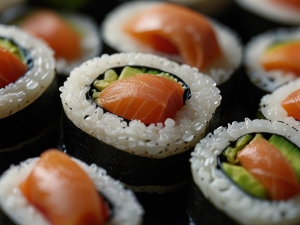
 This year marks the 40th anniversary of a quiet culinary revolution: the introduction of salmon into sushi by Norwegian innovators in 1985.
What began as a bold idea—convincing Japan to embrace raw Norwegian salmon—has since blossomed into a global phenomenon. Today, salmon sushi is a staple on menus worldwide, and behind this success lies a powerful, often overlooked engine: the aquaculture sector, fuelled in large part by marine ingredients like fishmeal and fish oil.
Marine ingredients are foundational to the efficiency, health, and sustainability of salmon farming. No wonder why more than fifty percent of fish oils used in aquaculture are used by the salmon farming sector.
In recent years, the industry has embraced precision nutrition—a science-driven approach to tailoring feed formulations to the specific needs of fish at different life stages. Fishmeal and fish oil are central to this strategy: no longer used as a commodity but rather as a strategic ingredient at key stages of the fish’s life, they enable feed producers and farmers to fine-tune diets for maximum feed efficiency, improved fish welfare, and reduced environmental impact. This targeted approach not only enhances productivity but also supports the responsible use of raw materials.
Fishmeal and fish oil have quietly powered the rise of salmon aquaculture, further reinforced by the increasing use of fish by-products. Let’s celebrate four decades of salmon sushi, as we look forward to our upcoming Annual Conference in Tokyo in October!