








As the global food system grapples with the dual imperatives of feeding a growing population and preserving planetary health, the aquaculture sector offers a sobering contrast with agriculture.
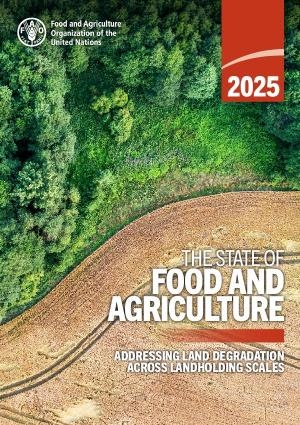 According to the FAO’s State of Food and Agriculture 2025 report, published early November 2025, the growth of global agricultural output (it has quadrupled since 1961), has come at a cost. Due to land degradation, total factor productivity growth has declined since the 2000s, particularly in the Global South, where some countries are experiencing negative growth.
In contrast, thanks to advances in precision nutrition and feed formulation, aquaculture has made significant strides in efficiency over the last decades. Feed ingredients are now being used more strategically, where they continue to leverage their greatest value.
The FAO report highlights that human-induced land degradation represents a growing threat to agricultural productivity and food security. Yet, aquafeeds have become largely reliant on terrestrial ingredients over the last decades. As a matter of fact, marine ingredients outperform terrestrial alternatives in carbon footprint, land use, and water consumption, and even more when sourced from by-products. Japan’s own aquaculture strategy, presented by the Fisheries Agency at the IFFO Conference, exemplifies the circular approach, with 70% of its marine ingredients derived from by-products.
At IFFO’s 2025 Annual Conference in Tokyo, a clear message emerged, based on the latest science: we must move beyond simplistic binaries and embrace a more realistic, science-based approach to sustainability. This will be key in selecting the most appropriate ingredients for aquafeeds, at a time when feed manufacturers have set ambitious targets to decrease their products’ carbon footprint by 2030. The future of aquafeed lies not in choosing between marine or plant-based ingredients, but in responsible sourcing across all categories. Agricultural systems are likely to remain an indispensable part of the solution because more volumes of feed ingredients are needed. Therefore, equally stringent requirements should be applied to terrestrial ingredients, matching the level of scrutiny currently placed on marine resources.
IFFO’s recent peer reviewed work on integrating circularity into LCA frameworks is a timely response to these global challenges.