








1 June 2026
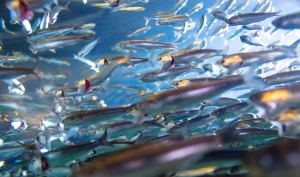 In Peru, which accounts for 20% of global fishmeal and fish oil production in a normal year, the anchoveta fishing season has progressed slowly due to the high incidence of juveniles and the resulting management measures, under ongoing Coastal El Niño conditions. “A new extended fishing ban was imposed in the north centre of the country on 27 May, as warm water and high juvenile presence suggest a precautionary management of the anchovy biomass. The new ban will be running until 10 June” stated Enrico Bachis, Market Research Director at IFFO.
In Chile*, cumulative catches and fishmeal output remain significantly below last year despite stable salmon by-product availability. In the US*, Gulf menhaden fishing has started better than last year, while the Atlantic season is scheduled to begin in June. Meanwhile, in Northern Europe*, the Blue whiting activity eased sharply as the main season winds down in Iceland and Norway, while Denmark continues to report weak sand eel and sprat fishing.
* This data is based on statistics shared by IFFO members in Chile, Denmark, Faroe Islands, Iceland, Ivory Coast, Mauritius, Norway, the UK, the USA, Peru, South Africa and Spain, accounting for 40% of global fishmeal production and 50% of fish oil output.
China’s fishmeal production is limited by fishing bans
China’s domestic production of marine ingredients remains constrained following the implementation of fishing bans on 1 May. As a result, raw material supply relies primarily on frozen fish accumulated prior to the moratorium, as well as by-products generated during processing. Supported by tight supply and a recovery in demand, local production of fishmeal and fish oil in the first four months of 2026 exceeded year-on-year levels.
For specialty aquatic species, higher feed ingredient costs, high feed prices, and weak farm-gate prices have led many aquafeed producers to anticipate that June and July will be the most challenging months of the year, with both sales volumes and profitability expected to decline year-on-year. In the first four months, aquafeed sales were largely supported by existing fish and shrimp stocks in ponds. However, as market-sized fish and shrimp are gradually harvested, future feed demand will depend heavily on farmers’ restocking activity.
In the short term, feed ingredients demand for pigfeed is expected to remain weak.
Soybean meal prices have recently declined due to oversupply and weaker demand from the feed sector, while corn prices have remained relatively stable overall. According to China’s Customs, soybean imports in the first four months of 2026 totaled approximately 25.15 million metric tons (mt), representing an 8.5% increase compared to the same period last year.