








The multitude of factors impacting our oceans
The second day of IFFO’s Annual Conference featured presentations and discussions on how to navigate the challenges facing the fishing and aquaculture industries. In the midst of a year of unprecedented El Nino conditions Prof. Francisco P. Chavez, from Monterey Bay Aquarium Research Institute, presented the latest findings on climate and ocean variability in relation to living marine resources.
While presenting the latest oceanic data, Chavez highlighted the need to further improve global modelling and species monitoring. Chavez highlighted the changing characteristics of oceans, looking at a time series of over 40 years, showing El Nino fluctuations and temperature fluctuations, and data is revealing the impacts of human intervention and increased CO2 in the atmosphere. He showed the ranges of climate systems and new modes appearing, all of which are causing physical and biological consequences. Environmental DNA data is showing that there are changes across the food chain, including fertilization, acidity, anoxia and hypoxia, resulting in shorter food chains, low biodiversity, and added pressures on forage species and predators.
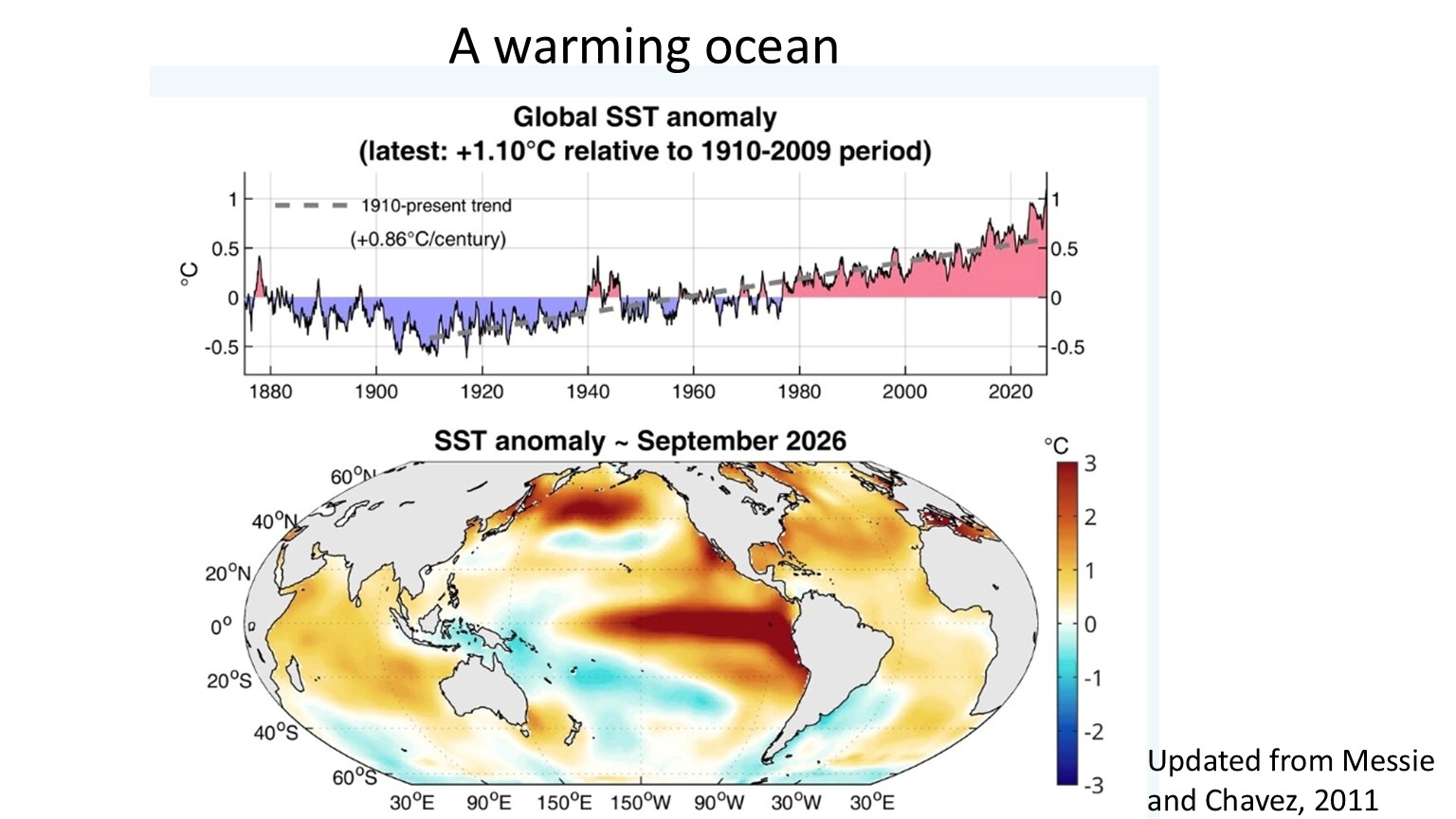
Ocean warming is spreading southward from Alaska, which causes similar impacts to El Nino and fishery impacts, but this is not as dramatic in terms of ocean depth. Chavez added that the timeframe of El Nino events have not changed in frequency but the data and monitoring has improved and our models of variability are changing. Chavez concluded that “observations of life in the sea, at similar time and space scales as physics and biogeochemistry will improve management and future predictions.” He added that “new developments in autonomous systems, instrumentation, and methods offer the means to make these observations routine.”
Volatile and evolving oils and proteins markets
 Moving to developments in the oils and proteins markets, Marcela Marini, Rabobank, presented how expanding biofuel demand is reshaping global feed supply chains, trade flows, and price relationships among key aquafeed ingredients. The global geopolitical landscape and increased weather risk premiums, Marini noted are reshaping prices in soybean, corn and wheat markets. She added that Soybean crops have reached record levels this year, driven by technology which is minimising climate impacts.
Macro volatility, Marini predicted, will remain high, even as underlying fundamentals soften. Geopolitics, energy prices, weather risks and financial flows will continue to amplify agricultural commodity price movements. Biofuels are changing the relative value of energy, lipids and proteins, but their impact cannot be assessed through commodity volumes alone.
Marini added that feed and fuel compete most directly in the lipid market and stronger biofuel demand supports vegetable-oil values and tighter oil balances. Higher oil values are incentivising additional crushing and this can expand the availability of soybean meal and other protein-rich coproducts. Feed formulations will continue to diversify, Marini stated, with relative prices and coproduct availability increasingly determining which ingredients capture demand.
Assessing sustainability trade-offs among feeds
 Looking at evolving feed formulations, Richard Cottrell, University of Tasmania, asked what matters more, the ingredients used or where they are sourced from. Ingredient sourcing decisions can powerfully mitigate sustainability trade-offs among feeds. “Feed is a flashpoint in Tasmania with their increasing salmon farming industry, marine ingredients have received a lot of scrutiny, but with changing aquafeed diets, this scrutiny is focusing on a largely strategic ingredient” he added.
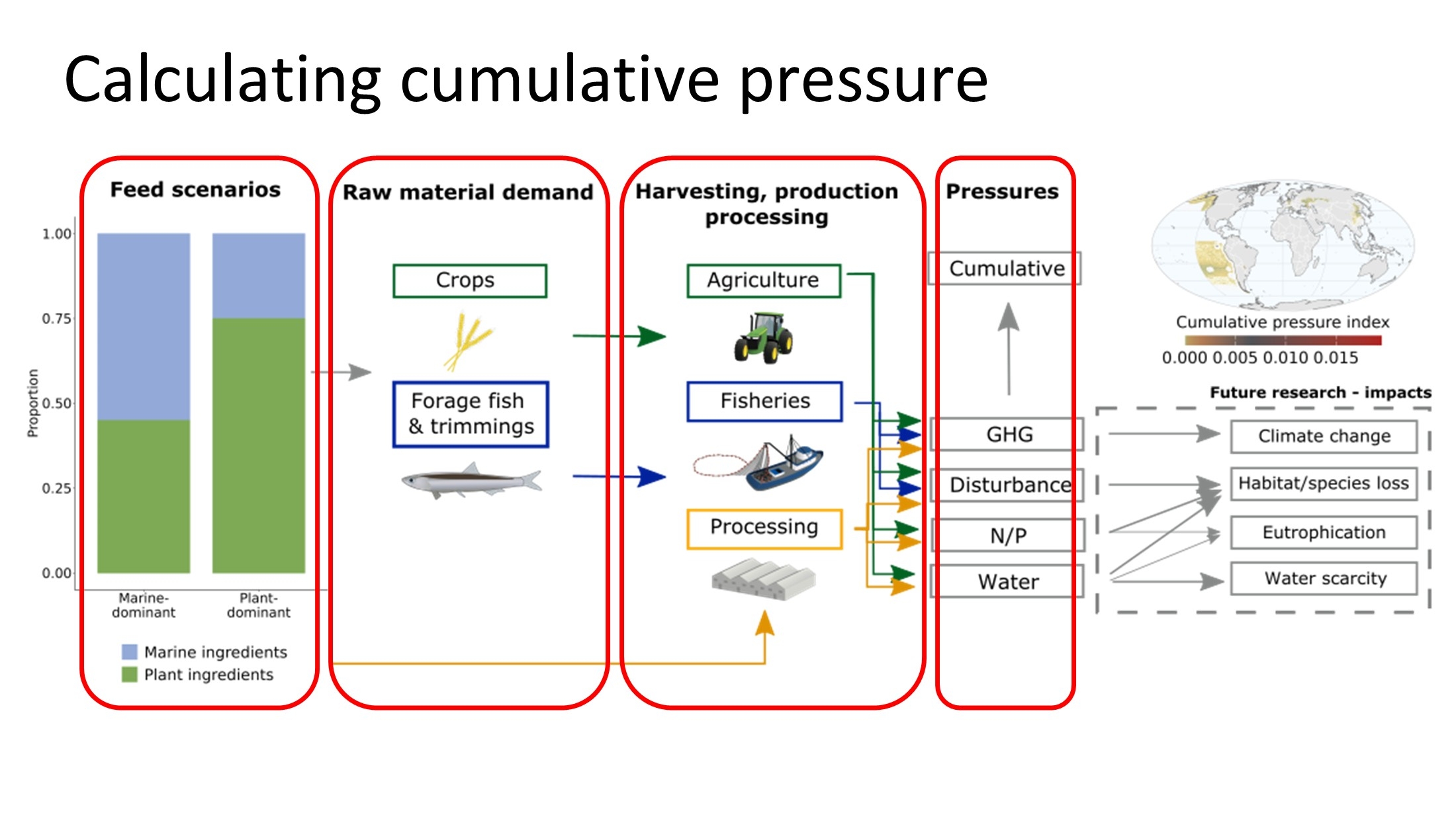
Cottrell introduced recent research that explores this question, applying quantitative methods to address sustainability challenges in aquafeeds and marine food production. Cottrell showed how traditional environmental trade-offs rarely consider the impact of where ingredients are sourced from and improvements in sustainability assessments are critical. The paper focused on the overall pressure of land or ocean use for feed ingredients for fed salmon, alongside greenhouse gas and nutrient pollution impacts, and freshwater consumption. In summary, the study showed that cumulative pressures were higher in a plant dominant diet than a fish dominant diet, and the ingredient origin was a dominant factor. He concluded that “there are trade-offs among feed, that can be powerfully omitted with responsible sourcing, and novel ingredients aren’t a simple answer as their impacts vary. The local is better mantra is not accurate, we need to instead take into account a multitude of factors in our sustainability assessments.”
No such thing as a free lunch: Understanding the impacts on biodiversity
 Exploring the wider biodiversity footprint of fish or plants in feed, Duncan Leadbitter (Fish Matter) presented a recently published peer reviewed paper that revealed some unexpected findings in the comparisons. Discussing agriculture impacts, Leadbitter noted that these range from habitat loss, both from deforestation and loss of wetlands, disturbed habitats that favour weeds/pests, river modification, and pollution from fertilisers and contaminants.
Leadbitter stated that “this paper shows that replacing animal protein sourced from marine capture fisheries with protein from agriculture will likely increase the threats to biodiversity given current human diets.” He added that “approximately half the Earth’s arable land surface has been converted from natural habitats to food production which has been identified as a key driver of biodiversity loss. Replacing all fish in aquaculture diets would result in the need for over 47,000 square kilometers of new land converted to agricultural production.”
This paper suggests that extinction risks per million tonnes of animal protein produced are 2.6 times higher for agriculture than marine capture fisheries. Leadbitter stated “that agriculture is the main driver of extinctions because it is predicated on the conversion of complex, natural ecosystem structures to simple, human-dominated systems, whereas well-managed fisheries seek to work within natural ecosystem structure and function”. He concluded that “Fish are clearly a limited resource and the benefits of using fish in feed can be extended into the future by more efficient use, increasing use of byproducts and good fisheries management. While there are a number of benefits of using plants where possible, protecting biodiversity is not one of them. The seafood industry is contributing to improvements in fisheries management and the fishmeal/oil sector is making efforts via Fishery Improvement Projects.”
Panel Discussion: feed ingredients responsible sourcing
Chaired by Jamie Wright, the panel featured the previous speakers alongside Teddy Escarabay, the Latin American Fisheries Director for Sustainable Fisheries Partnership, and Libby Woodhatch, the Executive Chair at MarinTrust.

Marcela Marini (Rabobank) highlighted the productivity gains achieved by Brazilian soy farming through the early adoption of technology. She noted that around 95% of Brazilian soy production takes place in the Cerrado rather than the Amazon, while the country's ability to harvest two crops within a single year has helped minimise pressure for further agricultural expansion. Although favourable rainfall patterns support production, she stressed the need for greater soil diversification. Marino also discussed Brazil's target of reaching a 20% biodiesel blend (B20) by 2030, acknowledging that this adds complexity to the value chain but ultimately strengthens the country's energy matrix. Importantly, she argued that the debate should not be framed as a choice between food and feed production.
Richard Cottrell (University of Tasmania) cautioned against oversimplifying the relationship between food and feed. While conflicts between the two may arise in certain regions, he argued that they do not inevitably compete everywhere. He also called for a more focused approach to sustainability measurement, suggesting that a smaller number of meaningful metrics, particularly those incorporating biodiversity outcomes, could be more useful than an abundance of metrics. Referring to marine ingredients, Cottrell underlined the importance of carefully assessing trade-offs before replacing them with alternative feed ingredients.

Focusing on responsible sourcing, Libby Woodhatch (MarinTrust) emphasised that all forms of food production come with impacts. Under the MarinTrust programme, responsible sourcing means not only mitigating impacts but also ensuring product safety, robust manufacturing practices, strong social safeguards and full traceability. While certification programmes play an important role in providing assurance, she stressed that they should be viewed as only one tool among many, representing a snapshot in time rather than a complete picture of performance. Woodhatch highlighted the need for market recognition of improvement efforts, noting that fishery improvement projects often require years to deliver results and depend on value-chain support to maintain momentum. Flexibility is also essential, she argued, as no single model can meet the needs of all fisheries. She pointed to MarinTrust's multispecies pilot initiative as an example of efforts to address the complexity of multispecies fisheries. Woodhatch further stressed the need for both NGO scrutiny and government engagement, welcomed the growing role of by-products as circular raw materials, and highlighted the importance of clear assurances around responsibility and traceability. In responding to increased media attention, she urged the sector to communicate its story consistently, referencing the work of the Global Roundtable on Marine Ingredients in improving understanding of sector challenges and opportunities through socio-economic studies and human rights impact assessments.
Teddy Escarabay (Sustainable Fisheries Partnership) distinguished between sustainability as an end goal and responsibility as a continuous journey. He emphasised that fishers must be included in decision-making processes and that responsible sourcing begins with compliance with fisheries regulations, including size limits and operational legality. Escarabay argued that responsible fisheries management depends on balancing rights and responsibilities. While comprehensive standards can drive improvements, he acknowledged that they can also increase sourcing costs, making industry investment in fisheries management all the more important. He presented fishery improvement projects as a practical pathway towards more responsible practices and stressed that standards must reflect the realities of individual fisheries. Drawing on Ecuador's experience, he described how a structured action plan enabled a successful transition from a fishery improvement programme to certification of fishmeal and fish oil production facilities.
Offering a broader perspective, Duncan Leadbitter (Fish Matter) discussed the importance of creating value and market demand that rewards responsible practices. He observed that public perceptions of fisheries and aquaculture are often shaped by media narratives and argued that greater attention should be paid to the progress being made towards sustainability rather than focusing solely on shortcomings. Leadbitter warned against using the growth of aquaculture as an excuse to reduce governments’ funding in fisheries management. He also pointed out that much of the sustainability debate remains concentrated on small pelagic fisheries in Europe and the Americas, while significant knowledge gaps persist regarding fisheries management in parts of Asia. In this context, he described the MarinTrust multispecies pilot as an important mechanism for improving understanding of complex fisheries in countries such as Vietnam and Thailand and for enabling more effective stakeholder engagement.