







With the collapse and / or changes in business plans among a range of novel feed ingredients producers in the recent months, we need to look deeper into the aquaculture sector’s sustainability narrative. Customers express increasing expectations regarding the quality, the impacts and the traceability of the products they purchase, and we all strive to contribute to improving our footprint on the planet. In this context, lucidity and realism are needed, alongside ambition and curiosity. All feed ingredients have their strengths and weaknesses and it is now the case of acknowledging that marine, agricultural, and novel ingredients should work together.
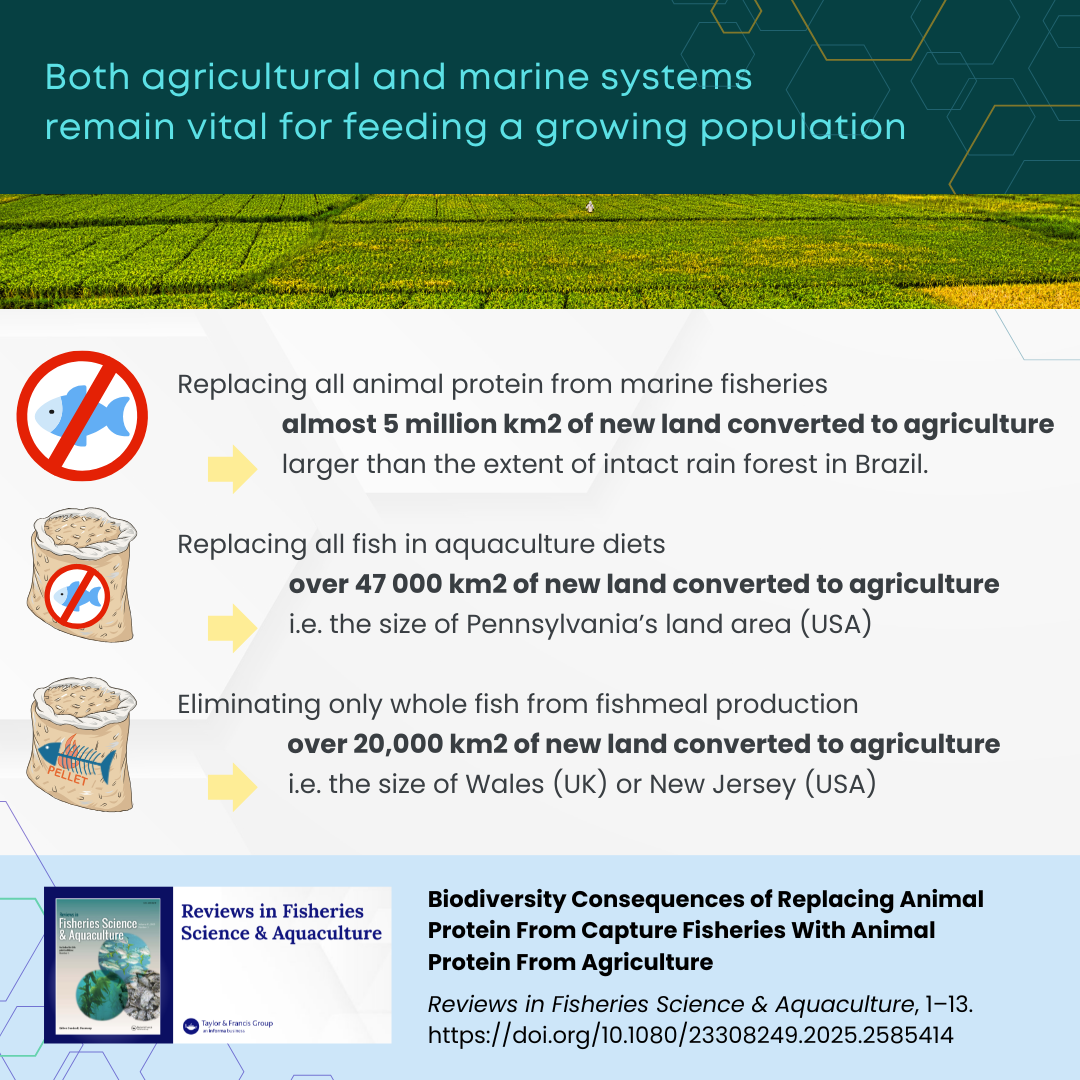
Recent science reinforces this broader perspective. A new biodiversity analysis led by Duncan Leadbitter (2025) shows the massive environmental costs of shifting protein away from the ocean. Replacing all capture‑fisheries protein with land‑based agriculture would require up to 5 million km² of new farmland—more than the entire intact Brazilian rainforest. Even removing whole fish used for fishmeal could mean over 20,000 km² of added cropland. Reducing marine inputs doesn’t erase impacts; it simply pushes them onto forests, soils, water, and biodiversity hotspots. Well‑managed fisheries are not the problem; they are part of the solution.