








Featuring Björn Kok, Technical Lead Sustainability Metrics at Skretting, and IFFO’s Technical Director Brett Glencross, this webinar explored a recently published study (February 2026) on how European aquafeed ingredients have changed and their impacts. Kok, who is the lead author of this study, started by explaining how feed ingredient usage for salmon has changed greatly since the 1990s, driven by the rapid growth of the industry, from mostly based on marine ingredients to one now based mostly on plant ingredients (Figure 1). Focus on aquafeed is justified as it still represents 70% farmed salmon production’s carbon footprint. Previous analysis has focused on wild fish inclusion levels and fish health, but the authors instead took a longer and wider lens on feed composition in European aquaculture. Using a technique called Index Decomposition Analysis (IDA), the study covers 5 key species (~96% of European production): Atlantic salmon, Rainbow trout, Gilthead seabream, European seabass, and Common Carp, and examines the changes in their feeds and production between 2000 and 2020.
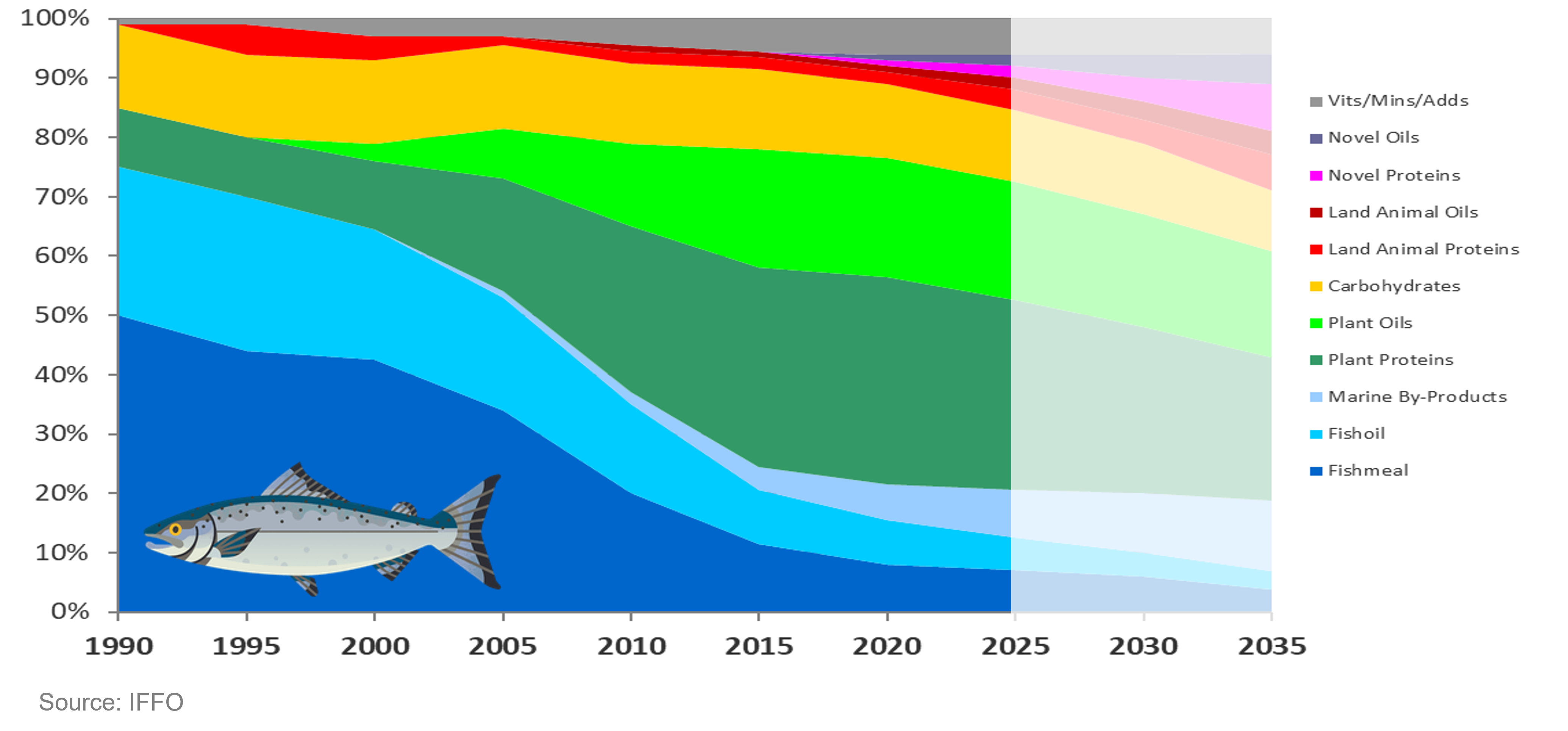
Figure 1
Increase in environmental indicators
The study showed that when looking only at the feed production, there was a 13% reduction in the total amount of wild fish used. Kok presented the changes in environmental indicators from 2000 to 2020, with the shifting focus from marine to terrestrial ingredient use presenting a more complicated picture. The analysis showed the relative increase in impact intensity, with the following impact increases:
- Greenhouse gas emissions : +314%
- Land use: +594%
- Water consumption: +236%
- Marine eutrophication: +630%
- Freshwater eutrophication: +468%
When calculating the various impact indicators, authors had to balance both feed inclusion rates and the growth of Europe’s aquaculture industry, breaking down the total change over the 20-year period to cover production, feed composition, feed efficiency, species structure, ingredient production and by-product use. “Index decomposition methodology was a technique first used in the late 1970s to study the impact of changes in product mix on industrial energy demand. It was developed as a way to break down changes in complex indicators, like energy use or emissions, into underlying drivers,” Kok explained, such as :
- activity (how much energy was produced),
- structure (how the energy was produced, e.g. coal vs gas, vs wind), and
- intensity (how efficiently it was produced).
Kok added :“While this method is well established in fields like national energy systems and industrial emissions, its application to aquafeed is still novel. By applying index decomposition to aquafeed, we can disentangle how changes in feed emissions are driven by factors such as production volumes, formulation shifts, and ingredient-specific footprints. This provides a more transparent and robust understanding of what is truly driving environmental performance in aquaculture supply chains. For marine ingredients, we could also isolate the impacts of the growing use of by-product utilisation.”
A key driving factor for the change in aquafeed ingredient usage, is clearly meeting the growing demands of the European aquaculture industry. “If diets had remained the same as in 2000, but the total aquaculture industry had grown like it did we would have needed an extra 1.75 million tonnes of wild fish for feed, which would have been impossible.”
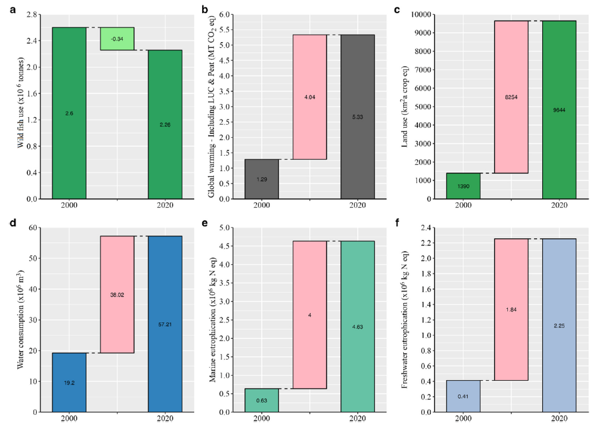
Figure 2
When looking at feed composition, Kok noted that there is a stark difference, with a substantial decrease in fish use in 2020 relative to 2000. This is completely offsetting the volume growth in demand on whole fish, whereas we see a dramatic increase with terrestrial impacts (Figure 2). With notably feed-composition change being the dominant driver of higher terrestrial impacts.
By-products provide an efficiency gain for marine ingredients
The analysis gets further complicated when you see the changes within ingredients, with the use of by-products (fish trimmings etc) reducing wild fish use by about 0.85 million tonnes. Kok stated:“This is important because it adds to the reduction already achieved through lower marine-ingredient inclusion. Production growth alone would have increased wild-fish demand, but lower marine-ingredient use and greater by-product utilisation together more than offset much of that pressure, leading to an overall decline in wild-fish use of about 13% between 2000 and 2020. So, this is one of the more promising outcomes: it keeps valuable marine nutrients, especially omega-3-rich inputs, in aquafeed, while reducing direct pressure on forage fish stocks.” He added that while by-product utilisation is a genuine efficiency gain, it is not a complete solution, but it is a relatively low-impact trade-off lever compared with replacing marine ingredients with soy or rapeseed-derived ingredients.
Shift from marine-based to terrestrial feed ingredients
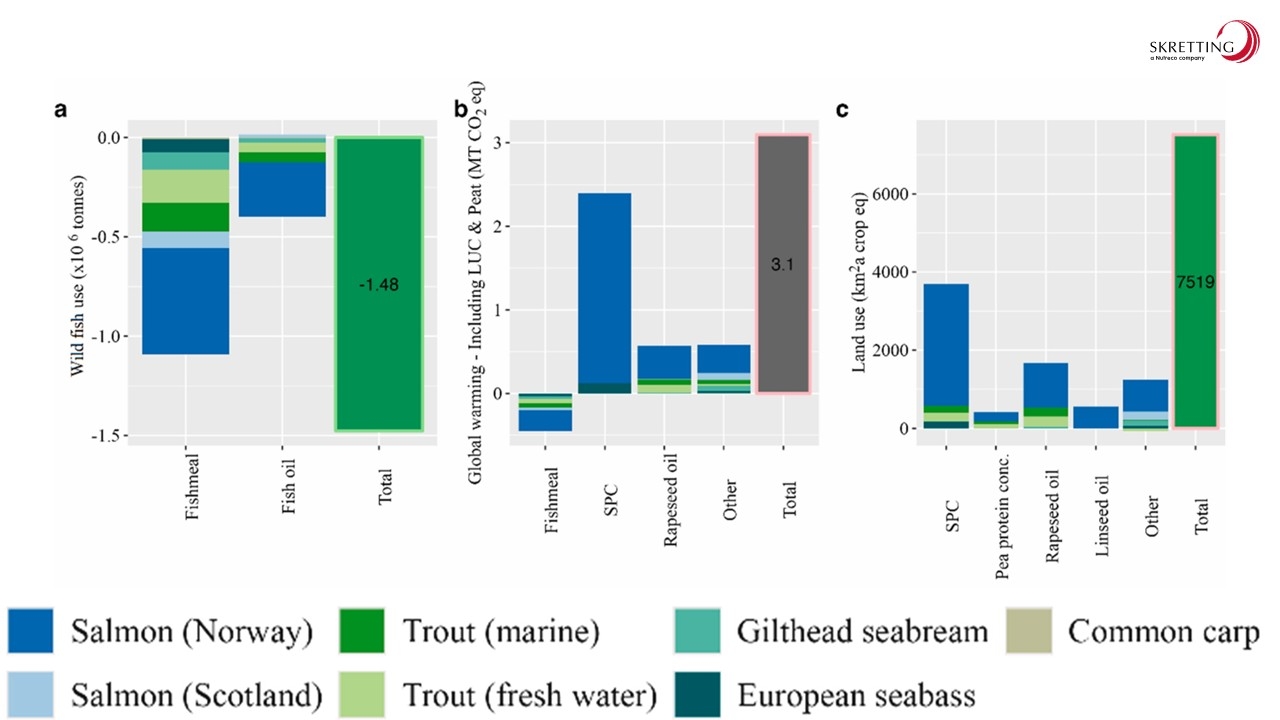
Figure 3
The authors saw that when using the eFIFO (economic Fish in : Fish out) metric, wild fish use greatly reduced from 2.6kg/kg in 1990s to 1.1 kg/kg in 2020s, which is a reduction of 59%. With that reduction and the shift to terrestrial feed ingredients, other environmental impacts increased strongly:
- Global warming: 1.24 → 2.55 kg CO₂eq/kg fish (+106%)
- Land use: 1.04 → 4.55 m²·a crop eq/kg fish (+336%)
Marine ingredients were replaced largely by plant-based ingredients, particularly soy protein concentrate and rapeseed oil. The graphs (graph A of Figure 3) show a decrease in wild fish use, with most of the effect coming from Norwegian salmon industry due to its dramatic decrease in marine ingredient use and its size within Europe. The graphs show the differing impacts between ingredients, with marine ingredients having a reducing impacts on average, where as all the terrestrial ingredient impacts go up. Kok challenged the common myths :”Marine ingredients are not automatically “unsustainable’, plant ingredients are not automatically “low impact”, and novel feed ingredients are not automatically a solution”.
Single metric tunnel vision
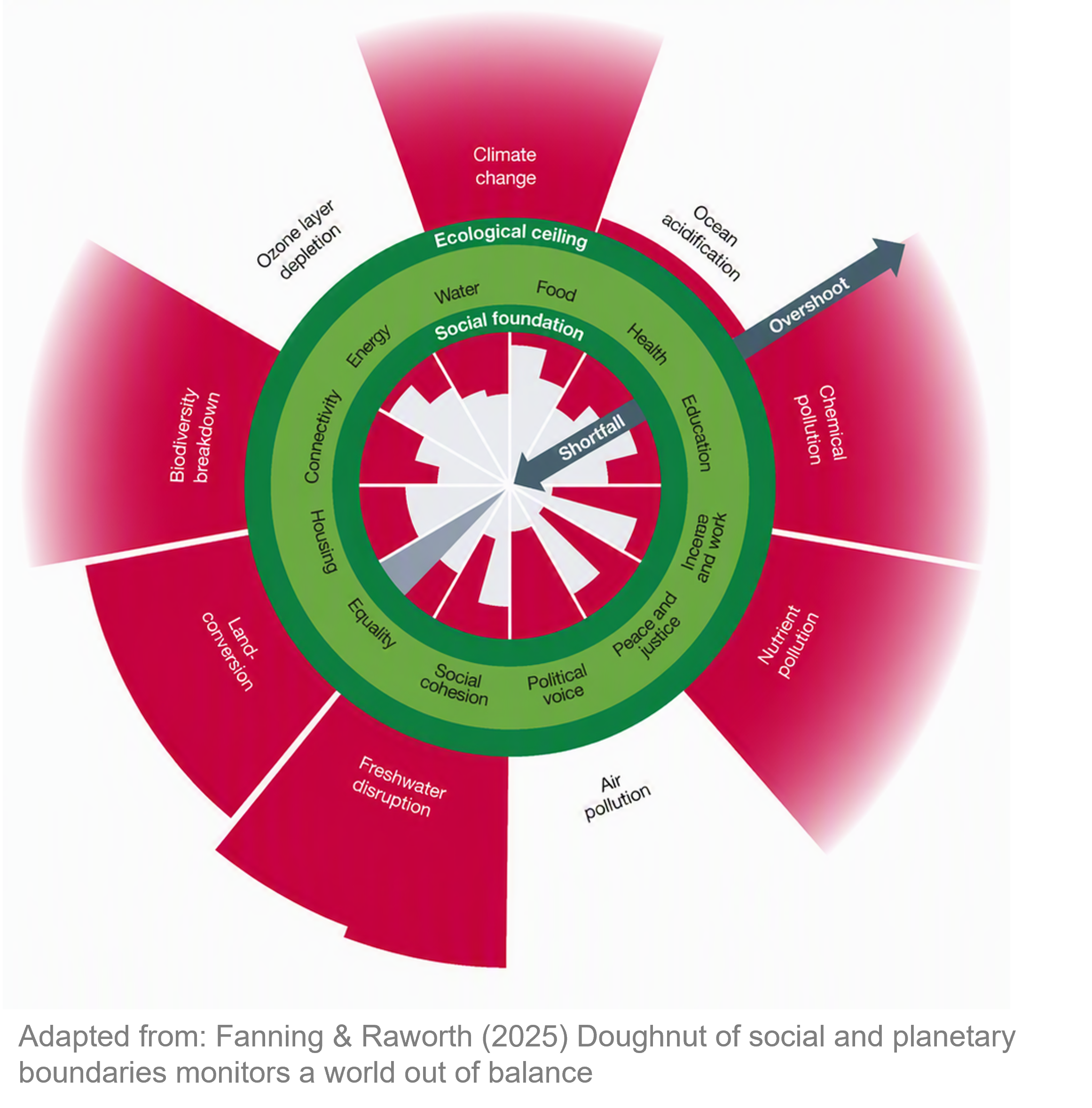 The last decades have been dominated by a focus on single metrics such as FIFO (Fish In: Fish Out) and FFDR (Forage Fish Dependency Ratio), but this study has shown that these metrics are unable to deliver sustainability but instead shift the pressure. Kok added that “we need to broaden and define our measurements for sustainability, taking a more holistic view, which includes planetary boundaries and social foundations, and avoids increasing pressures while delivering global nutrition. It’s not just a hobby, it’s in our own interest to change and we are witnessing climate change impacts even now with the high temperatures and another emerging El Nino. We need more flexibility, and novel feed ingredients can play a role in this but the trade offs need to be managed. There is no perfect feed ingredient, it is a broader and more complex balance”.
Ingredients map
Looking forward, Kok noted that the industry needs a diverse raw material basket to offer resilience and flexibility. Insect protein is nutritionally interesting, offering the ability to utilise low value by-products, however the carbon footprint appears to be higher and there can be strong competition with its reliance on resources that can be used in other animal feeds, like pigs and poultry. On single cell protein, he noted again that it is nutritionally viable and has the benefit that it is decoupled from agriculture with no competition with food or feed. The trade-off is that it’s often reliant on fossil carbon sources such as natural gas, and is energy intensive. Lastly, algae oil provides a very interesting alternative source of EPA and DHA that does not rely on fisheries and is rapidly improving, but it too has a higher carbon footprint.
In terms of how to measure these ingredients on an equal footing, Kok recommended that his suggested holistic approach includes Life Cycle Assessment (LCA), neFIFO (Nutrient Economic Fish In: Fish Out), and decomposition analysis; along with the consideration of social and economic sustainability. Kok added that Certification Standards also need to be aware of these expanding metrics as they have a key role in driving market change and need consider the other trade-offs. Glencross stated that IFFO has been working with collaborators on how to apply both marine and terrestrial biodiversity impacts to LCA, but there are challenges with the two areas of science having little overlap.
“Reducing dependence on marine resources has been treated as the main environmental sustainability goal in aquaculture. As we move forward, let's not repeat the same mistake again: today's sustainability solution can become tomorrow's unintended consequence. Carbon matters, but so do water, land, and other critical trade-offs. We must advance with a good understanding of impacts, so we're not looking back in 20 years asking how we solved one problem by creating another,” Kok concluded.
Explore more: IFFO infographics on this study
Full webinar recording