







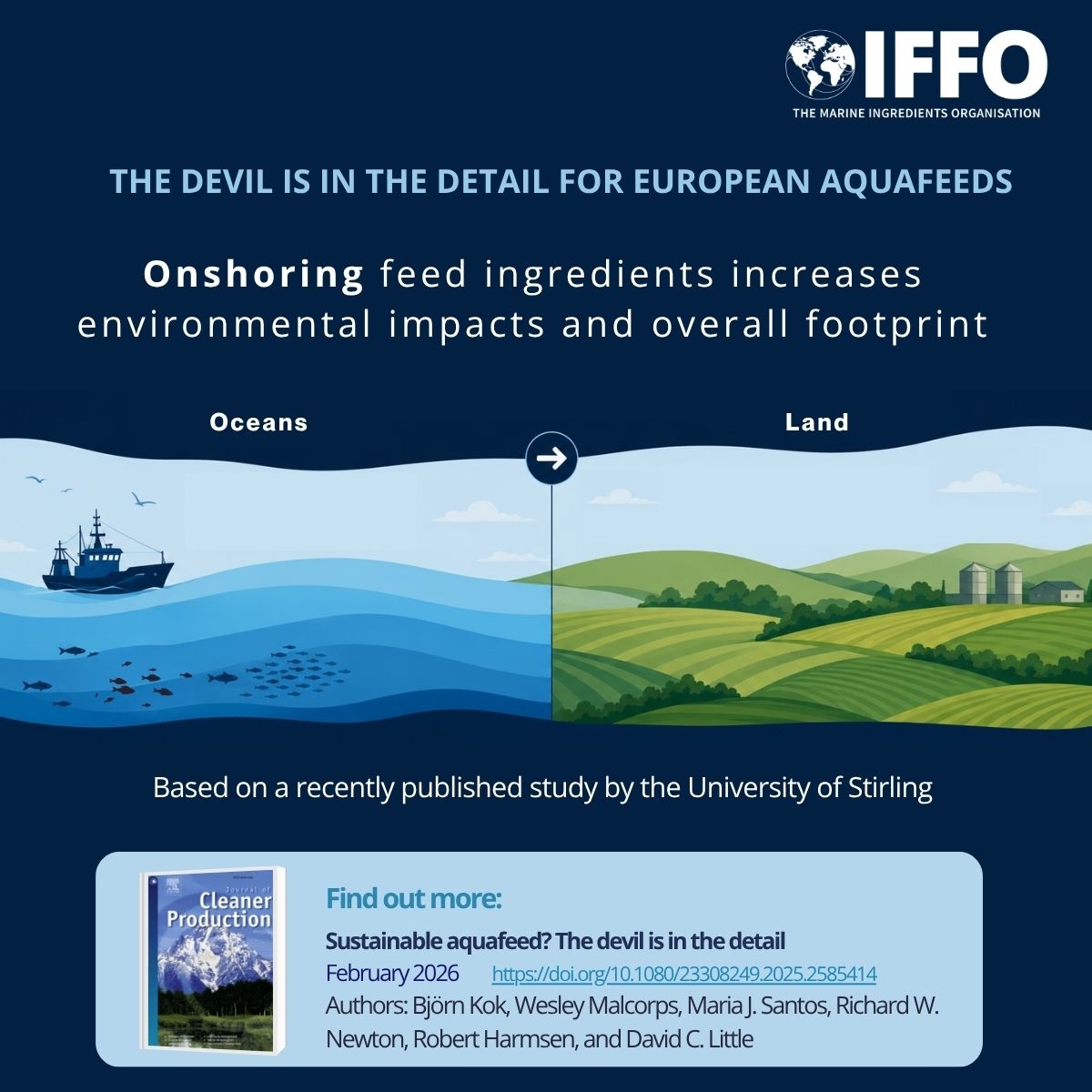
Summary of academic paper: Sustainable aquafeed? The devil is in the detail (published February 2026)
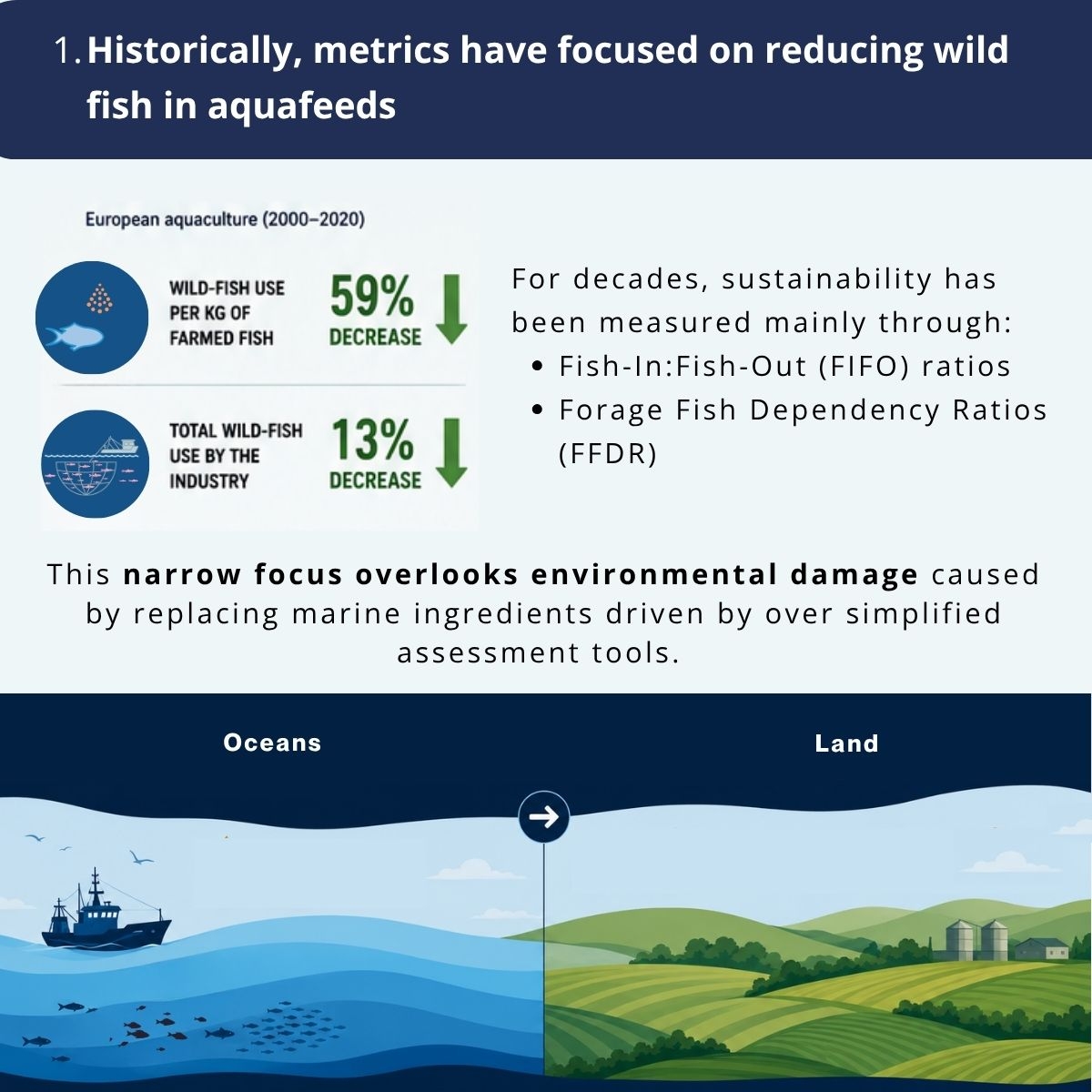
Historically, metrics have focused on reducing wild fish in aquafeeds
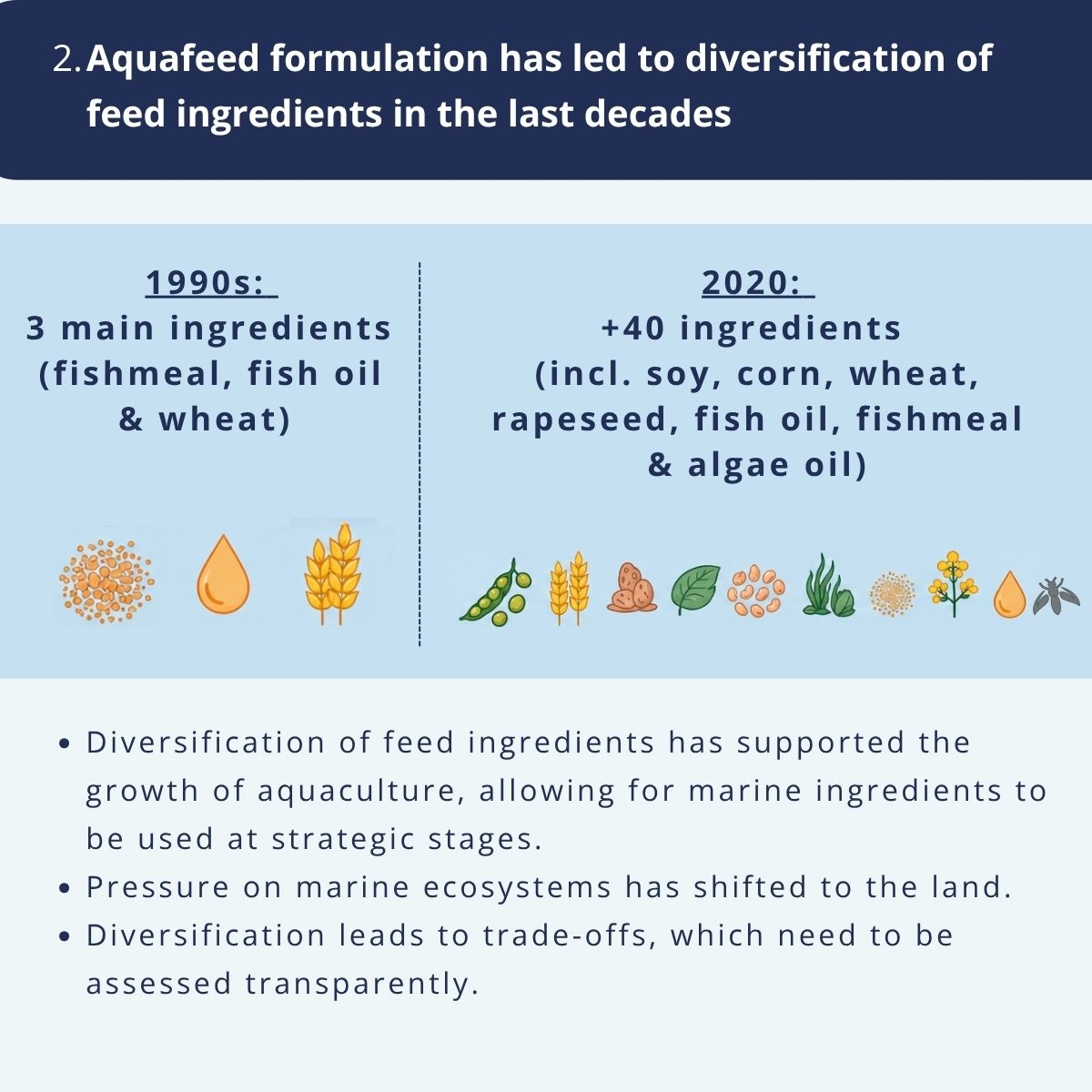
Aquafeed formulation has led to diversification of feed ingredients in the last decades
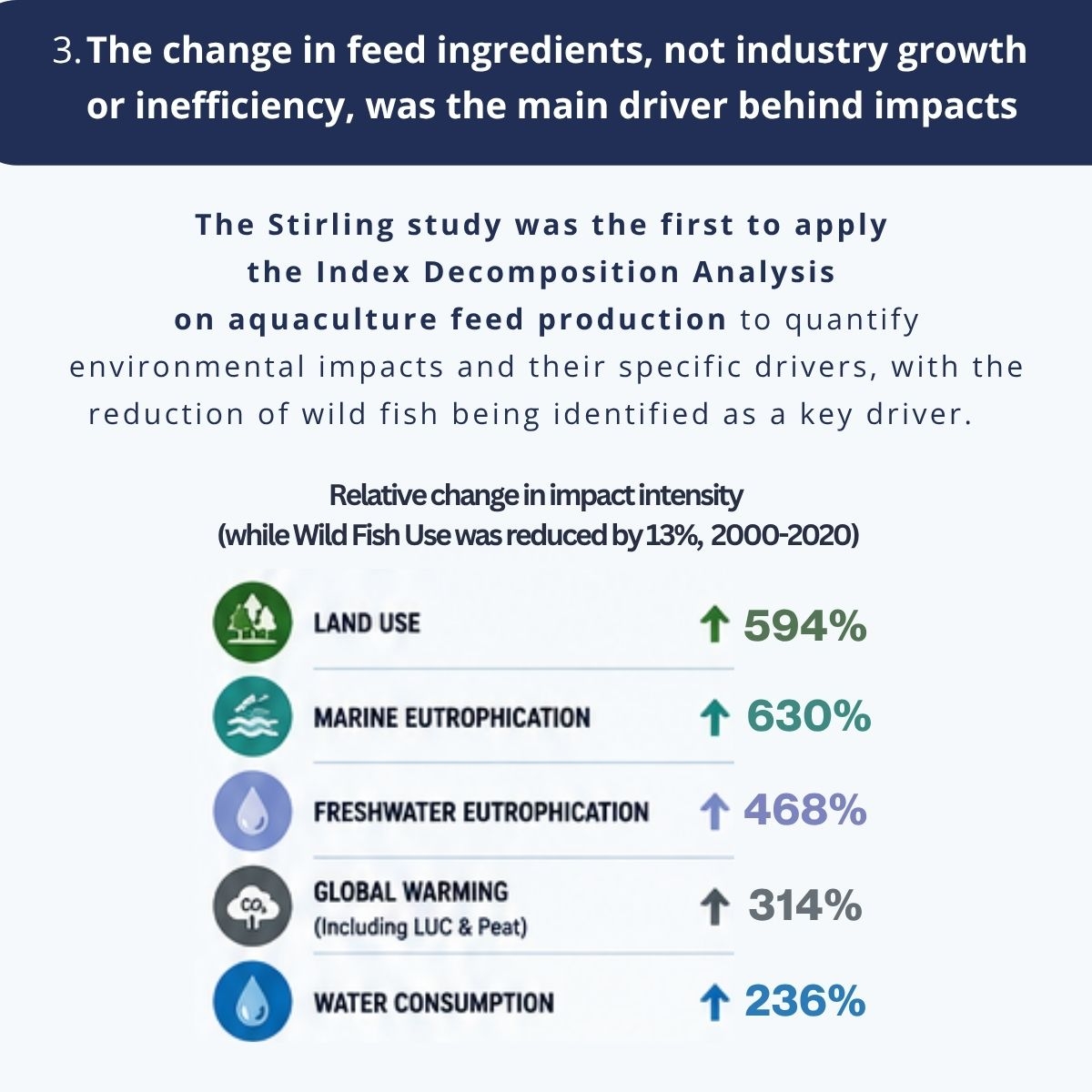
The change in feed ingredients, not industry growth or inefficiency, was the main driver behind impacts
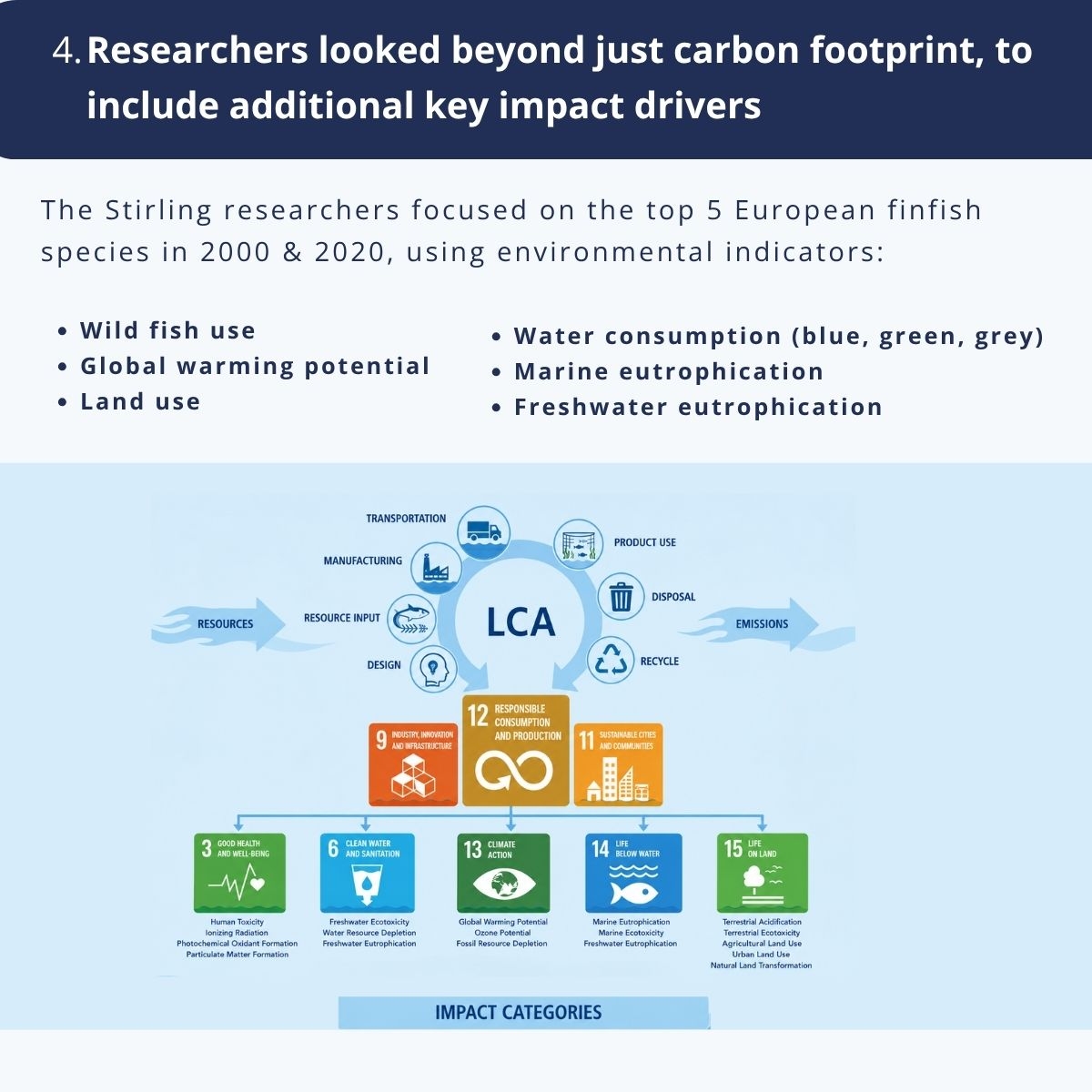
Researchers looked beyond just carbon footprint, to include additional key impact drivers
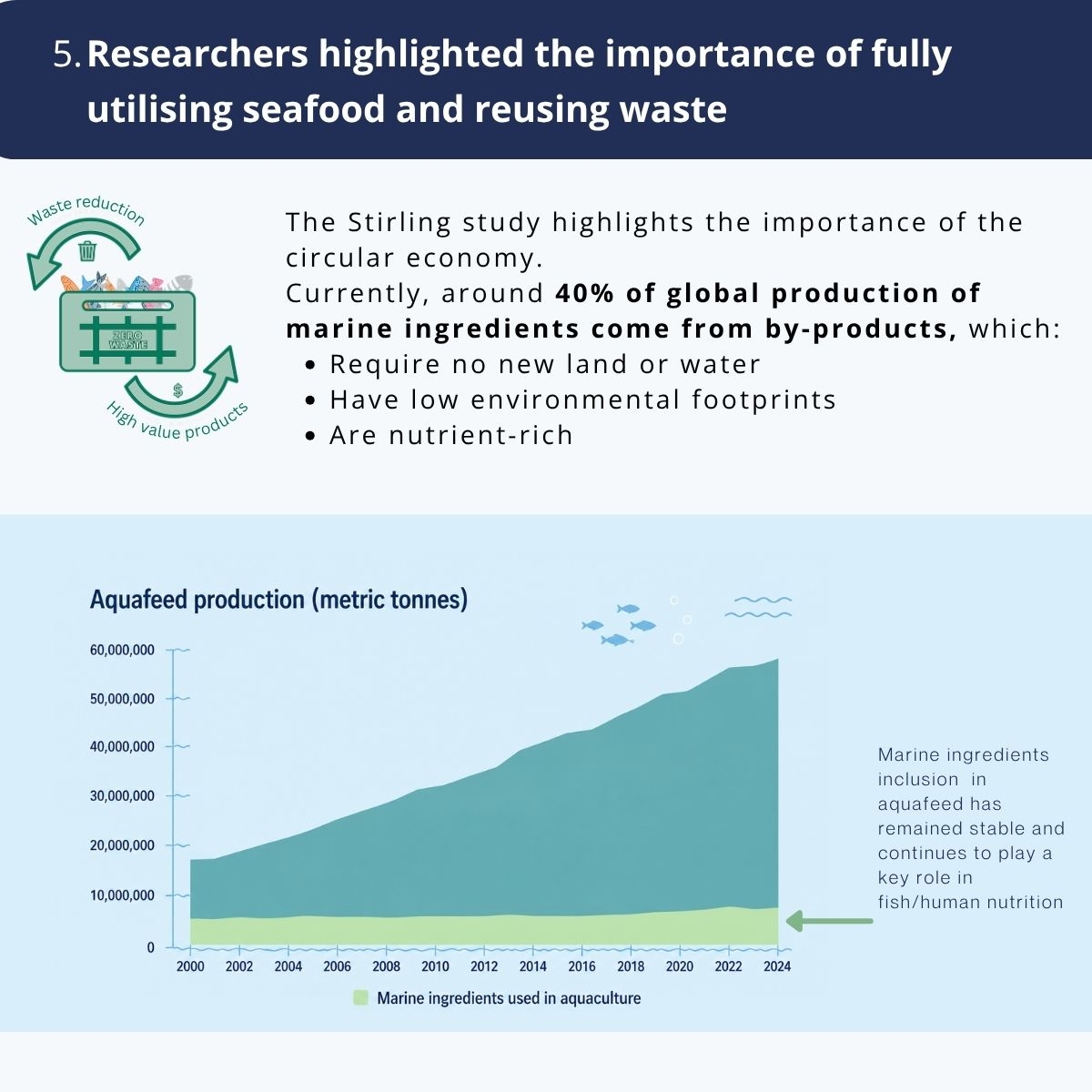
Researchers highlighted the importance of fully utilising seafood and reusing waste
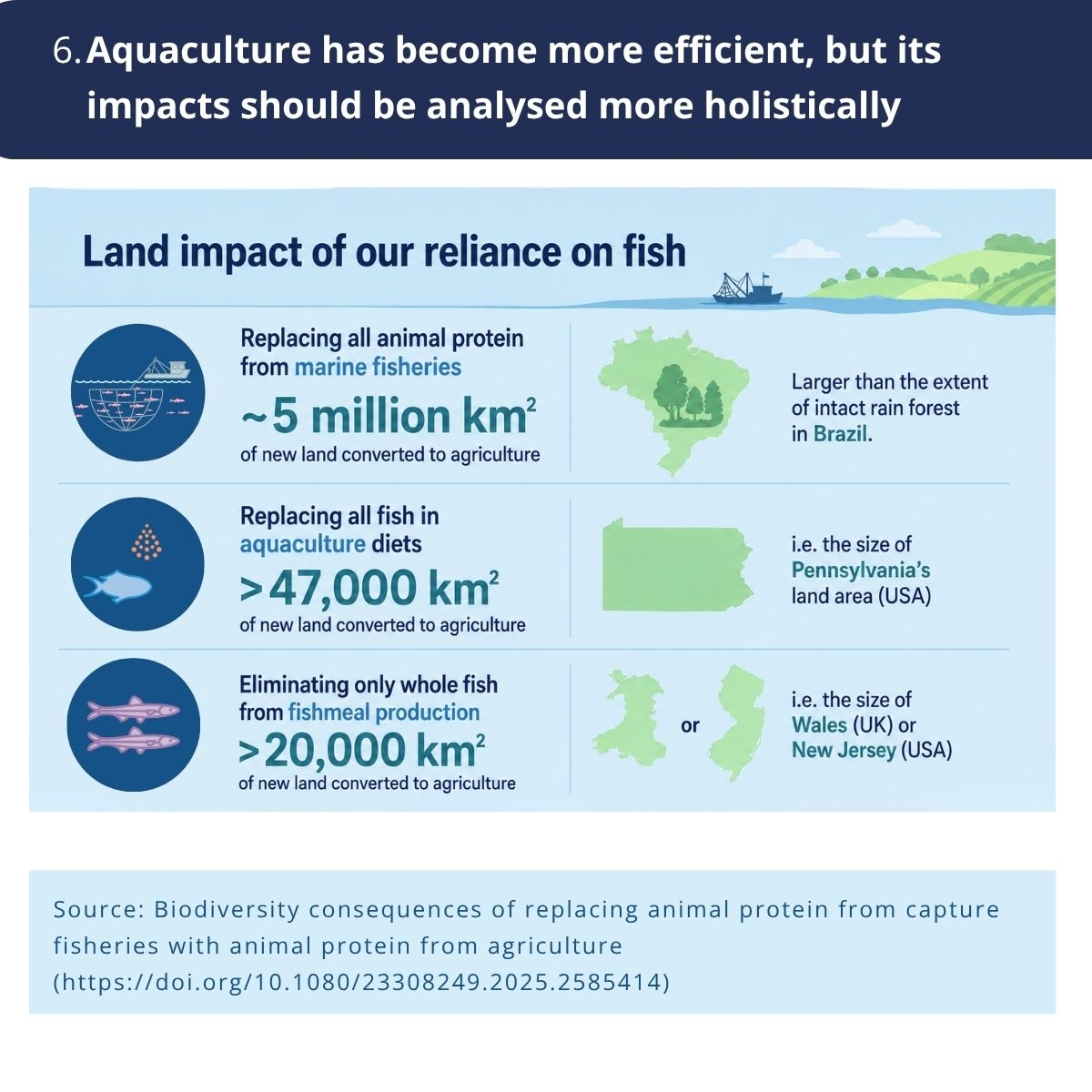
Aquaculture has become more efficient, but its impacts should be analysed more holistically
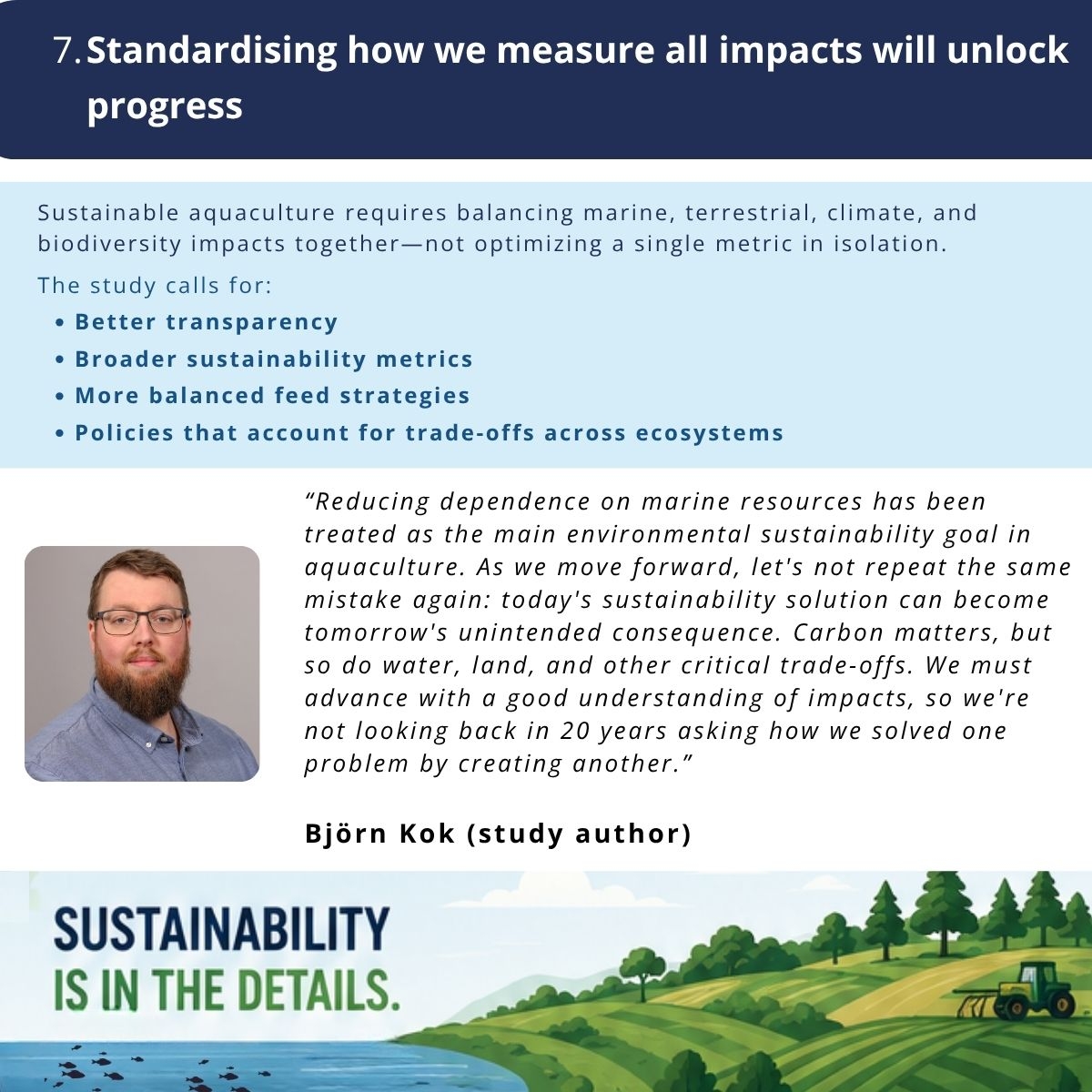
Standardising how we measure all impacts will unlock progress