








IFFO’s Annual Conference opened in Buenos Aires with a record high number of 530 delegates from 45 countries, coming together across three days of discussions. The comprehensive agenda covers key industry priorities, including navigating geopolitics, fishery management, responsible sourcing requirements and delivering deep market analyses from both a demand and supply perspective.
Maximise value and resource management
 Opening the conference, IFFO’s President Adriana Guidice stated that the marine ingredients industry has enormous relevance in the world and needs to maximise the value of every fish, improving efficiency in operations and infrastructure. She added that “in challenging times, as our industry faces the consequences of El Niño and the instability of ocean conditions, we must value science more than ever. Science guides the management decisions that local authorities make to safeguard fish stocks and ensure their long-term sustainability. We must continue to collaborate and contribute with industry data, supported by advanced technologies that enable us to monitor biomass and better understand the marine environment. By combining science-based management, innovation and operational discipline, we can strengthen our industry’s resilience and improve our ability to anticipate and adapt to changing conditions.”
 IFFO’s Director General Petter Martin Johannessen echoed calls for a science based approach, adding that “Circularity is key to how our industry keeps evolving. We use those resources to produce more food. Thanks to efficiency gains, 1 kg of marine raw material produces 5 kg of farmed fish. The whole value chain is working together, from fisheries and producers to feed manufacturers, farmers and retailers. We all have a role in supporting fisheries management based on science. That cooperation helps secure raw materials for the long term. It also helps keep quota decisions grounded in science rather than pressure.”
Aquaculture supports global nutrition
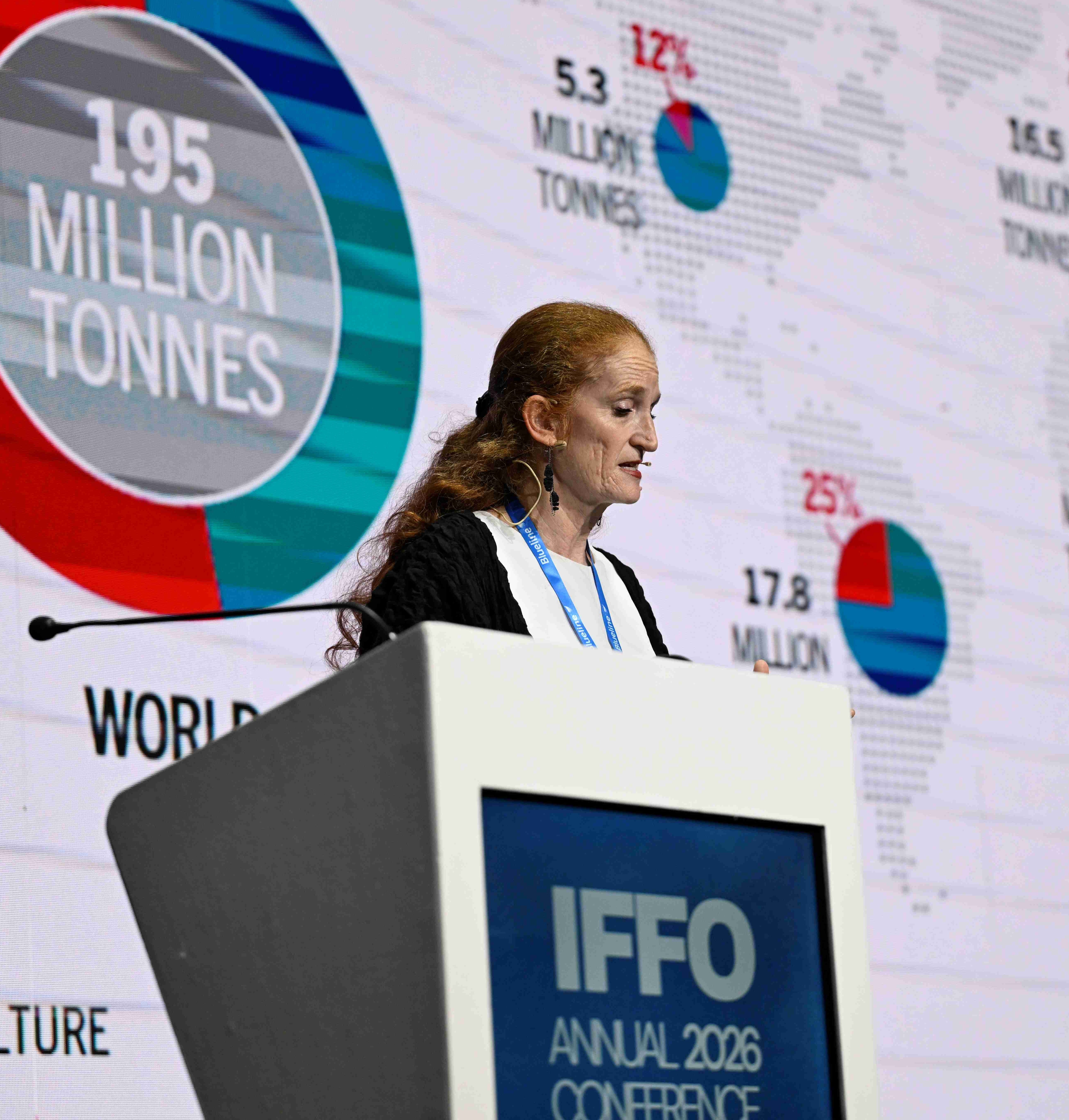 FAO’s Senior Fishery Officer Stefania Vannuccini set the global scene presenting the latest figures on aquaculture and fisheries production, consumption and sustainability trends. Vannuccini stated that world fisheries and aquaculture production is at an all-time high, producing 235 MT in 2024, with 95 MT coming from capture (3900 species) and 103 MT coming from aquaculture (770 species). This number of species shows how diverse the sector, with growth rates also varying greatly between regions, with the highest in Africa with annual growth rate of 7.8%. She added that aquaculture production in inland and marine waters continues to grow and now accounts for 53% of total aquatic animal production, whilst capture production remains stable, and capture fisheries used for reduction has declined. More fish is going to food and the use of marine ingredients is expected to remain stable in the coming years, supported by the growing use of by-products, with 54% of fish oil and 34% of fishmeal now coming from by-products.
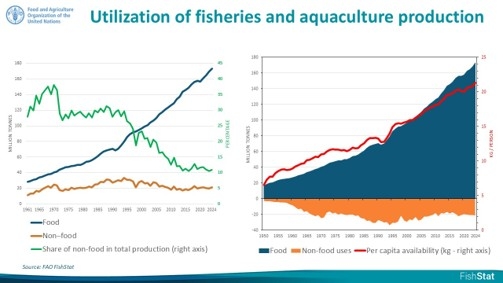
Vannuccini highlighted the global contribution of the aquatic sector (capture and aquaculture), supporting 65 million people (primary sector) and with a total production valued at USD $545 billion (total first sale value aquatic animals), a new record and 9.2% growth from 2023. However with population growth, Vannucci added, “that more is expected from aquatic food systems, but we must ensure further growth is sustainable, impactful and equitable. To meet the demand in 2050 at current per capita consumption we will require an extra 19% globally and 67% in Africa”.
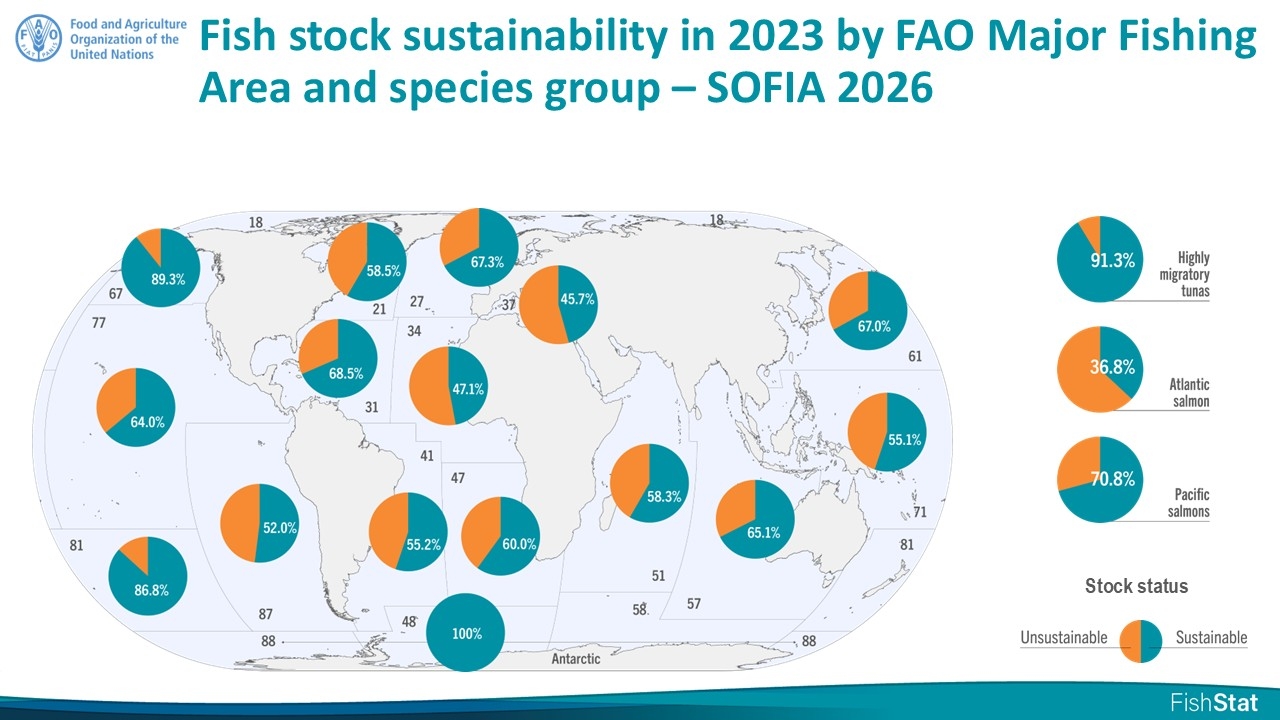
Climate change impacts are there, she noted, and changes in maximum catch potential could decrease by up to 12%, so action is needed to mitigate this impact. Sustainable management of stocks remains a key challenge, with 73% of world stocks are biologically sustainable, but we need to keep working to improve the remaining 27%. The answer to these challenges, Vannuccini concluded is ‘Blue Transformation’, turning ambition into action through sustainable aquaculture, effective fisheries management and upgraded value chains. Effective fisheries management, she added, needs to be supported by sound science and strong cooperation. She concluded that sustainable fisheries and aquaculture are indispensable to food security, nutrition, livelihoods and economic development, particularly for vulnerable communities.
Building commercial resilience in shipping
Exploring the commercial reality of shipping and multiple pressures facing the industry, BIMCO’s Thomas Damsgaard gave a sobering overview noting that “the line between geopolitics and commerce has thinned. Events once regarded as external now reach the balance sheet quickly. Shipping no longer operates in the background of the global economy; it is increasingly part of the foreground.” He added that there is a decoupling in the industry happening, with the move from globalization to nationalization to protectionism, and we are losing the efficiency of a free market. This is causing commercial fallout with delays and heightened exposure to vessels and crews.
Damsgaard stated that the shipping industry is adapting and raised the importance of contractual standards, allowing shipping to continue operating across borders even when politics do not cooperate. The BIMCO library of 350 standard contracts and clauses enables efficient contractual negotiations which minimises the risk of disputes.
Commercial risk ultimately lands on people, Damsgaard added, and when maritime trade is disrupted, the consequences are felt far beyond the sector itself and crews experience uncertainty first‑hand – through longer voyages, higher stress and greater exposure to danger. He concluded that “Shipping’s licence to operate increasingly depends on how well it is understood outside the industry. Human stories cut through complexity in ways technical explanations cannot. Supporting seafarers is not separate from commercial resilience. It is part of it. When crews are treated fairly, operations are safer, more stable and more sustainable. The commercial reality of shipping today is defined by how well risk, rules and people are aligned. Weakness in any one area quickly exposes the others.”
Escalating feed prices
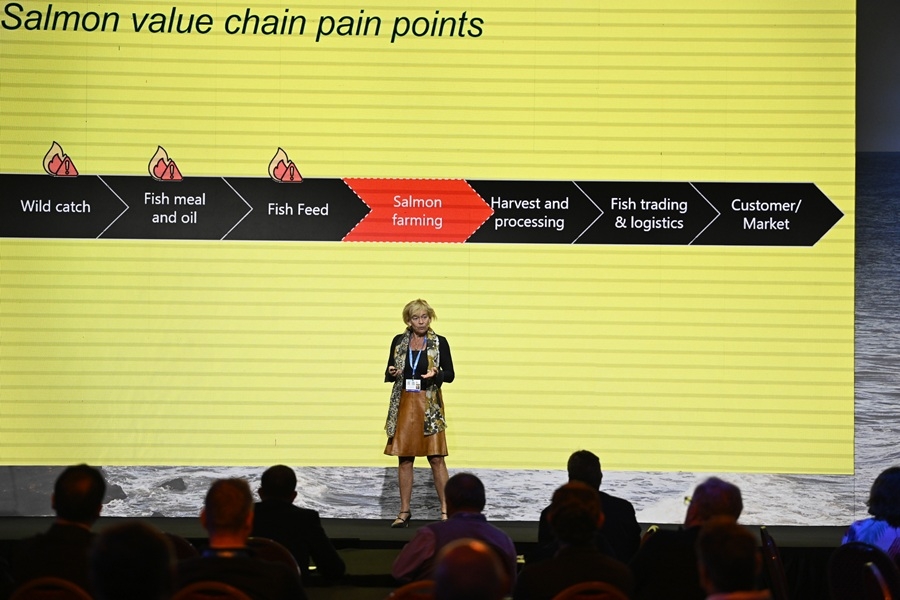
Providing a finance perspective, Anne Hvistendahl, the Global Head of Seafood for DNB Bank, which is the world’s largest seafood bank, presented the bank’s perspective on the industry. Hvistendahl echoed the multitude of challenges facing fishing, feed, and aquaculture industries; from the risk for pelagic fisheries with climate impacts and gaps in certification. She noted that due to record fishmeal and fish oil high prices, aquafeed recipes are changing with increased use of poultry, GMO and ‘novel’ ingredients.
Hvistendahl added that “salmon farmers are facing high feed costs that they can’t push onto their customers, with a lack of ingredients impacting production, which is pushing the envelope in terms of recipes in terms of fish health and productivity; and shrimp producers are being hit even harder”.
To meet these challenges, Hvistendahl stated that the industry needs to build resilience, as the bedrock of this is scientific quotas and get certified, for example with North Atlantic Blue Whiting. Secondly industries need to diversify and not rely on the same species and geographic location. Lastly vertical integration is important as it evens out earnings volatility across value chain. For marine ingredients, Hvistendahl concluded that as an industry “you are in a good position as fishmeal and fish oil will always be sold, even if novel/alternative ingredients are more accepted and soften prices. Be agile, robust, and have options!”
Building stronger partnerships in feed
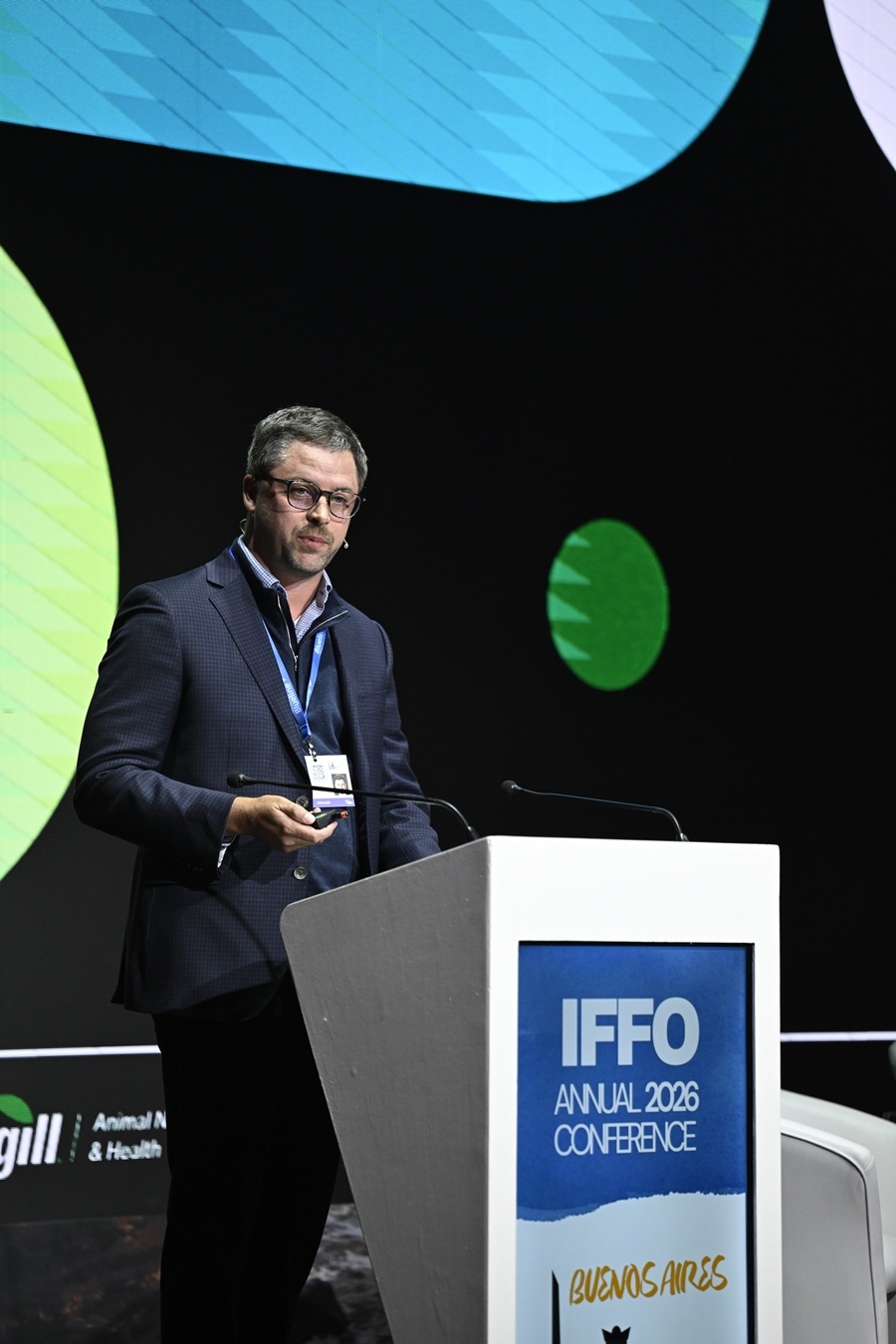
Turning to feed, Brad Rude from Cargill Animal Nutrition and Health presented the challenge facing their industry: “We must advance the industry amid increasing volatility and higher customer demand. Rude highlighted that by 2050, the world’s population will grow to 10 billion, resulting in a projected ~50% higher demand for animal-based protein. And yet, Rude added there are growing challenges facing the industry, from increasing energy/freight prices, supply disruption, geopolitical impacts, and climate impacts, including El Niño. He added that for fishmeal and fish oil, “supply and demand is increasingly elastic, and price events are more dramatic.”
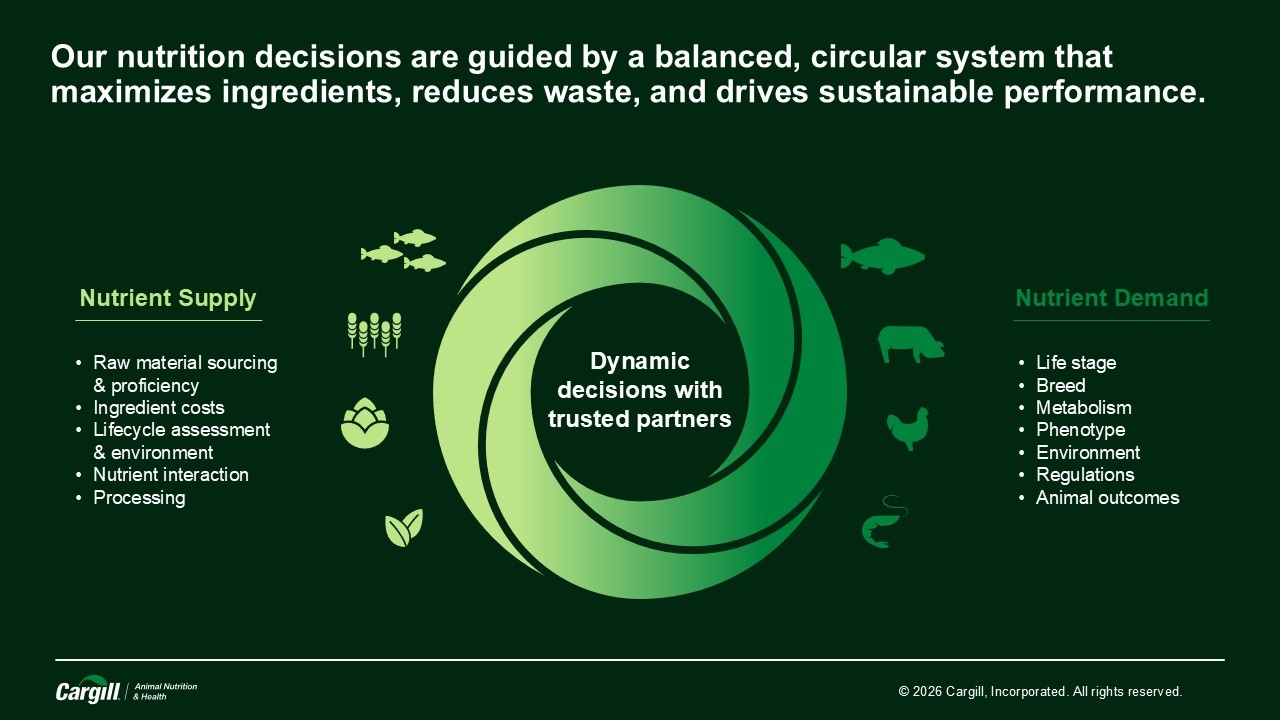
In response, Cargill are building stronger partnership with science-backed solutions. Rude noted the “Our customers expect more than functional products, they demand clear ROI, deep expertise, and future-proof solutions that drive efficiency, resilience, and long-term growth.” Rude added that Cargill is “balancing nutrient supply and demand by ensuring nutrients are balanced, with a circular system that maximises ingredients, reduces waste and driving sustainable performance.”
Building industry resilience
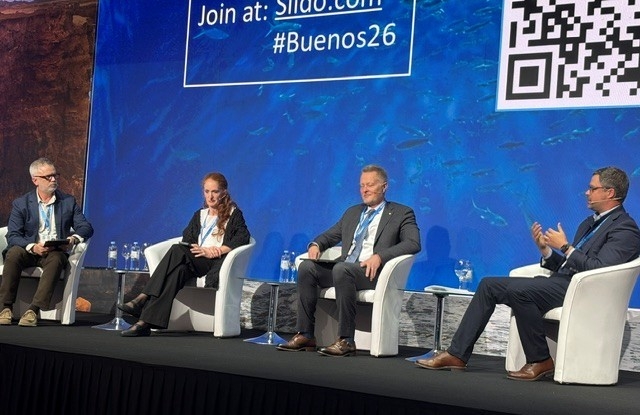
Speakers joined Jamie Wright, a global seafood journalist, who chaired discussions on building resilience in the marine ingredients industry. Stefania Vannucini (FAO) defined resilience as the sector’s ability to continue producing nutritious food while sustaining livelihoods. She stressed that there is no single solution: robust data is essential, but it must be combined with an understanding of how decisions affect communities. Building resilience requires strong foundations before crises occur. Reflecting on recent years, particularly the Covid-19 pandemic, she noted the sector’s remarkable flexibility in adapting to disruptions. With trade disruptions becoming increasingly frequent, stronger partnerships, diversification and more inclusive policies are needed. The upcoming FAO Guidance for social responsibility in fisheries and aquaculture value chains were highlighted as an important framework to support inclusive approaches, while sustainable growth in aquaculture will be critical to meeting future demand.
Thomas Damsgaard (BIMCO), drawing an analogy with jazz, described resilience as the ability to respond to the environment: “You need to step out of your echo chambers, we need to respond off each other and not follow an old set of rules, but responding to the environment that we are operating it”. He pointed to better use of data as some of the industry’s most accessible opportunities with many benefits including reduced fraud, data aggregation for improved decision making. Yet, despite these opportunities, much of the industry still relies heavily on paper-based processes. Damsgaard also observed that markets and supply chains that were once regional have increasingly become global, creating new opportunities beyond the lowest common denominator. “Companies are adding seafarers wellness as part of their corporate sustainability and calling for emissions reductions in trade. Look beyond the one dimensional freight rate and focused on relationship building, education and systems improvements he stressed”.
Brad Rude (Cargill) emphasised that the marine ingredients industry has already demonstrated its resilience through a series of recent challenges. He noted that planning has become more scenario-based in response to an unpredictable future. Rude singled out the Peruvian marine ingredients sector as a leading example of resilience, praising its industry discipline and commitment to responsible management. He expressed confidence in the sector’s recovery and reaffirmed Cargill’s continued commitment as a customer. Looking ahead, he argued that marine ingredients will remain core to the future of aquaculture, with novel ingredients including poultry by-products also having a role to fill in some gaps.