








London, 11 June 2026
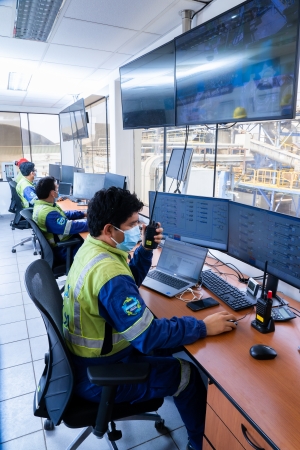 Under ongoing Coastal El Niño conditions, the Peruvian authorities have extended the current fishing ban, which was running until 10 June 2026, in the maritime area stretching from the northern limit of Peru’s maritime domain to 16°00′S. No date has been announced for the termination of the suspension.
The measure may be lifted fully, partially, or gradually by the Vice-Ministry of Fisheries and Aquaculture, subject to IMARPE’s scientific assessment and updated biological, fishing, and environmental conditions. Repeated suspensions reflect ongoing concerns around warm waters and a high share of juvenile fish. This points to a biomass that is still present but dispersed.
“Peru accounts for a large share of global fishmeal and fish oil supply, implying that disruptions quickly tighten availability”, Enrico Bachis, Market Director at IFFO, stated.
Global trends in marine ingredients point to widespread weaker fishmeal output than same period last year. April 2026 fishmeal production* fell 21% year on year, and cumulative production was down 26% versus 2025. In this global landscape, the United States was the main exception, while Denmark/Norway and African countries recorded the sharpest monthly declines.
Fish oil output* was also lower, with April 2026 production down 19% year on year and cumulative output down 14%.The cumulative picture was more mixed by region than for fishmeal: Spain stood out with cumulative production up 36%, and Chile was close to flat, while Peru, Iceland/North Atlantic and African countries drove the overall decline.
* This data is based on statistics shared by IFFO members in Chile, Denmark, Faroe Islands, Iceland, Ivory Coast, Mauritius, Norway, the UK, the USA, Peru, South Africa and Spain, accounting for 40% of global fishmeal production and 50% of fish oil output.